Empty church sanctuary with wooden pews facing the altar
COGIC FAMILY LIFE CENTER

Church FamilyResource Academy

Learn, grow and lead. Video lessons, ebooks and articles for every church family.

ACADEMY VIDEOS

Video Lessons

Teaching and training videos from Bro. Steve Harris.

Video lessons coming soon

Academy video lessons have not been published yet.

ARTICLES

Articles & Insights

Faith, ministry and family life reading.

Church Growth · 8 min read

Five Marks of a Growing Church

By Bro. Steve Harris

Healthy churches share common traits. Here are five marks to look for — and to build — in your congregation.

Read the full article

A growing church is not measured by numbers alone, but by health. Scripture shows us that the early church "grew daily" because it was devoted to the right things. When the foundation is sound, growth follows naturally. When it is neglected, even the loudest programs slowly quiet down.

The five marks are simple but powerful: fervent prayer, faithful preaching of the Word, genuine fellowship, consistent outreach, and intentional discipleship. Remove any one of these, and growth slows. Strengthen them together, and the church becomes a place where lives are changed week after week.

The first mark is fervent prayer. Nothing that lasts is built without it. A church that prays together before it plans together walks in a different kind of power. Prayer meetings should not be treated as an attendance competition; they should be treated as the engine room of the ministry. When the altar is hot, the doors stay open.

The second mark is faithful preaching of the Word. People are hungry for truth that speaks to the Monday morning, not just the Sunday evening. Preaching that comforts without challenging leaves a congregation driftless; preaching that challenges without comfort leaves them exhausted. The Word must be lifted up, explained, and applied — and it must be delivered with the expectation that the Holy Ghost will move.

The third mark is genuine fellowship. Many people leave a church not because they disagreed with the message, but because they never found friends. Fellowship is the glue. It is the handshake at the door, the name remembered, the meal brought when someone is sick. A church can have excellent music and fine preaching and still feel cold to a stranger who is lonely.

The fourth mark is consistent outreach. A church that only looks inward shrinks inward. Outreach does not need to be complicated or expensive — it needs to be steady. One faithful food drive each quarter does more for the neighborhood than ten grand plans that never happen. The community learns to trust a church that shows up regularly.

The fifth mark is intentional discipleship. Growth that is not followed by depth produces crowds, not disciples. Every believer needs a next step: a class, a book, a mentor, a serving role. If a person can attend your church for two years without changing, the discipleship pipeline has a leak somewhere.

Take an honest look at your ministry this month. Which of the five marks is strongest? Which needs attention? Do not try to fix all five at once. Choose one area, gather your leaders, and make a plan with dates and names attached. Small, faithful steps produce lasting growth.

Finally, remember that growth is stewardship, not vanity. The goal is never a bigger platform; the goal is more souls reached, more families healed, and more leaders raised up. Keep that motive clean and the five marks will follow.
Church Growth · 8 min read

Making First-Time Visitors Feel at Home

By Bro. Steve Harris

A visitor decides in the first ten minutes whether they will return. Learn how to make those minutes count.

Read the full article

Every growing church was once a stranger's first visit. Studies show that guests decide within the first ten minutes whether they will ever come back — often before the sermon even begins. That means your parking lot, your greeters, and your welcome matter as much as your pulpit.

Begin before the doors open. Clear signage, a clean and welcoming entrance, and a parking lot where someone is ready to help are the first sermon a visitor hears. A person who has to hunt for a place to park, or who walks past three closed doors, has already been told something about how the church will treat them.

Greeters set the temperature. Train them to smile first and talk second, to learn names quickly, and to walk a guest to a seat rather than pointing. A greeter who remembers a visitor by name the second Sunday is worth more than a printed bulletin any day of the week.

Children and families decide as a unit. If a parent cannot find the nursery, or the children's area feels chaotic or unwelcoming, the whole family often leaves and does not return. Give the children's ministry the same care you give the main sanctuary, and make sure a real person meets every parent at that door.

Music and order matter more than we like to admit. A visitor does not know your songs, your customs, or your rhythm. A service that is warm but confused is hard to follow. Keep transitions clear, explain what is happening when something unusual occurs, and let the joy of worship carry a guest who does not yet know the words.

The message should include them. When a preacher speaks as though everyone in the room has been in church their whole life, the newcomer disappears. A word of welcome, an illustration drawn from everyday life, and an invitation that a first-time guest could actually answer all tell them this place is for them too.

Follow-up is where most churches lose the harvest. Reach out within forty-eight hours with a call, card, or message thanking them for coming. Keep it personal, not programmatic. One genuine sentence — "I was glad you were with us Sunday, how can I pray for you?" — opens a door that a form letter never will.

Give them a way to belong, not just to attend. Invite the guest to a small group, a meal after service, or a serving opportunity that fits their gifts. People return where they feel seen and valued, and they stay where they have a name and a place.

Remember, visitors are not interruptions to the service — they are the reason for it. Train your whole congregation to treat every guest like family, and watch how many of them become family.

Church Growth · 8 min read

Growing Deeper Through Small Groups

By Bro. Steve Harris

Sunday service gathers the crowd, but small groups build the church. Here is why they matter and how to start.

Read the full article

The early church met in the temple and from house to house. Large gatherings inspire, but small groups are where people are truly known, discipled, and cared for. A church of any size can grow stronger by growing smaller.

In a Sunday service, a person can sit in a pew for twenty years without anyone knowing they are drowning. In a group of eight, that same person is noticed the second week. This is why a church that only gathers on Sunday will always carry silent wounds it never sees.

Small groups give every member a place to belong, a place to serve, and a place to grow. They also lighten the load on pastoral leadership, because care happens naturally among members who know each other well. The pastor should be equipping shepherds, not being the only one.

Start simple: one or two groups, meeting in homes or at the church, built around prayer, the Word, and fellowship. Do not wait for a perfect curriculum or a perfect building. Choose faithful leaders, give them clear direction, and let the groups multiply as they grow.

Leader selection is the most important decision you will make. A group is only as healthy as the person leading it. Look for a believer who is dependable, kind, and teachable before you look for one who is gifted at speaking. A quiet leader who shows up consistently will outlast a gifted one who burns out.

Keep the structure light. A group that requires seven weeks of prep, a binder, and a committee will die. A simple rhythm — a shared meal, a passage of Scripture, a time of prayer, and honest conversation about the week — can be repeated anywhere by almost anyone.

Protect the atmosphere. Groups become powerful when people can speak honestly without being fixed or gossiped about. Set that expectation out loud in the first meeting: what is shared in the group stays in the group, and nobody leaves without prayer.

Connect groups back to the church body. A group that drifts into a private club creates division. Report into the leadership, pray for the vision of the whole church, and celebrate together when a group adds a new member or leads someone to Christ.

Multiply rather than swell. When a group passes twelve or fourteen people, it usually stops feeling like family. Send two or three out to start again. Multiplication is how a church keeps the warmth of a small group while growing the number of people who know the Lord.

Church Growth · 8 min read

Reaching Your Community for Christ

By Bro. Steve Harris

The fields are ready for harvest. Practical ways your church can serve its neighbors and open doors for the Gospel.

Read the full article

Jesus said the harvest is plentiful but the laborers are few. Your community is full of families who need hope, and many of them will never walk through your doors unless the church first walks into their lives.

Outreach does not have to be complicated. Food giveaways, back-to-school drives, community clean-ups, and prayer walks all open doors. When people see the love of Christ in action, they become willing to hear the message of Christ in word.

The first step is knowing your neighborhood. Walk it. Learn the names of the schools, the shuttered storefronts, the single mothers, the elderly on fixed incomes. A church that can name its community's real needs is already ahead of one that runs programs for people it has never met.

Pick one need and meet it consistently. A monthly food table that never fails builds more trust than a spectacular annual event nobody remembers. Faithful service builds trust, trust builds relationships, and relationships build the church.

Serve with dignity. Handing out groceries is ministry, not marketing. People are not props for a church brochure. Ask before you photograph, never make anyone perform gratitude, and let the person in front of you be treated like a neighbor rather than a project.

Partner with people already doing good. Schools, shelters, fire stations, and civic groups often need help far more than they need a new program. When the church shows up as a helpful neighbor instead of a competitor, doors that were locked swing open.

Train members to see everyday evangelism. The woman who volunteers at the food pantry, the man who mows an elderly neighbor's lawn, the young people who clean a vacant lot — these are all witnesses. Most people will hear the Gospel first from a friend, not from a pulpit.

Always leave a door open to the Gospel. Service that never mentions Christ leaves people fed but unfed in the way that matters most. A simple invitation — "we pray for this neighborhood every Sunday, would you like us to pray for your family too?" — is gentle, honest, and effective.

Keep the long view. A community that has been used by organizations will test your sincerity for a season. Do not be discouraged. Keep showing up, keep serving, keep praying, and the same neighborhood that watched you carefully will begin to bring you its joy and its grief.

Church Growth · 8 min read

Helping New Members Stay Connected

By Bro. Steve Harris

Growth is not just adding members — it is keeping them. Simple steps to help new believers take root and flourish.

Read the full article

Many churches work hard to win souls, only to watch new members quietly drift away within a year. Keeping members is not automatic — it takes a plan. Every new believer needs connection, instruction, and a place to serve.

The first ninety days decide a great deal. A person who comes into a church is like a transplant: the roots are exposed and the shock is real. What happens in the first three months usually determines whether they stay for three years or vanish by the next summer.

Within the first month, connect each new member with three things: a friend or mentor who checks on them, a class or study that grounds them in the faith, and a ministry where they can use their gifts. People stay where they are needed and known.

Assign a real person, not a committee. One believer who calls, texts, and saves a seat does what no welcome packet can. This is often the simplest and most neglected step in a church: naming someone to be responsible for a newcomer's first weeks.

Teach them the why, not only the what. A new member who understands why the church prays, gives, serves, and gathers will hold fast when the emotion of the first visit fades. Explain the customs, the expectations, and the heart behind them plainly and without apology.

Give them a serving role early. People who serve stay. A newcomer who is trusted with a real responsibility — a chair, a plate, a doorway, a chair in the children's room — begins to feel ownership rather than membership.

Follow up faithfully. A simple call when someone misses a few Sundays can save a family. Never let absence be interpreted as disinterest; often it is a job change, a illness, a private shame, or a family crisis. A gentle "we missed you" carries a person back.

Watch for the quiet ones. Not every struggling member raises a hand. Some stop coming without ever announcing it. Train your leaders to notice the person who slipped from the aisle, the parking lot, and the group, and to move toward them before the silence becomes permanent.

When new members take root, they do not just stay — they bring others with them. A kept member becomes a witness, a worker, and eventually a leader. Faithfulness in retention is one of the quietest and most powerful forms of church growth.

Church Growth · 8 min read

The Power of a Consistent Prayer Ministry

By Bro. Steve Harris

Before a church grows in numbers, it must grow on its knees. How to build a prayer ministry that never goes cold.

Read the full article

Every movement of God in Scripture began with people who prayed. Before the church in Jerusalem grew, they waited. Before the harvest multiplied, they cried out. A church can copy every program in this academy and still produce nothing if it has no prayer life behind it.

Consistency matters more than size. Twenty believers who pray faithfully every week will move more mountains than two hundred who pray once a quarter. The goal is not a crowded prayer meeting; the goal is a people who cannot stop praying.

Start with the leaders. When the pastor, deacons, and ministry heads are visibly devoted to prayer, the congregation follows. When leadership only mentions prayer in the announcement, the church learns to treat it as optional. Whatever you want to see in the pew, model it first at the altar.

Give prayer a fixed place in the church calendar. A weekly prayer service, a morning line that opens every meeting, a monthly all-night — structure protects consistency. Spontaneity is precious, but spontaneity without a rhythm fades within a season.

Teach people what to pray for. Many believers do not stop praying because they lost faith; they stop because they ran out of directions. A prayer list with names, needs, and dates turns a vague religious duty into a concrete work of love.

Keep record of answers. Write down what was asked and what came back. A church that remembers its answered prayers prays with more boldness the next time. Testimony fuels faith, and faith fuels the prayer meeting.

Guard the atmosphere. Prayer meetings must be safe places — for the broken, the doubting, the grieving, and the newly saved. Discourage performance, rebuke gossip dressed as intercession, and let the humblest person in the room feel free to cry out.

Send people out from the prayer place. Intercession that never becomes action is only religion. When the prayer ministry ends, the work should begin: visits made, meals carried, calls placed, and neighbors loved. Prayer and service are two hands of one body.

If your prayer fire has gone down, do not be ashamed — begin again. Set a season of return, gather a small company of believers, and commit to a plain, faithful rhythm. Within a few months, the same church that felt cold can become a house of flame.

Church Growth · 8 min read

Raising Up New Leaders in Your Church

By Bro. Steve Harris

A church that only has one leader will only ever grow as large as one person. Learn how to raise the next generation.

Read the full article

A church that depends on one leader will only ever grow as large as one person. If the ministry cannot function while the pastor is away, that is not a strong church — it is a one-man show with a congregation watching.

Leadership multiplication is a biblical pattern. Moses took Jethro's counsel and appointed judges. Jesus spent three years with twelve. Paul trained Silas, Timothy, and Titus before he ever wrote a letter. The Great Commission was given to a church, not a celebrity.

Look for character before gifting. Talent is easy to find; faithfulness is rare. Choose the person who shows up early, stays late, keeps a confidence, and treats the janitor the same as the bishop. Gifting can be taught; a proud heart cannot.

Give real responsibility, not busy work. A trainee leader must be allowed to actually lead — to plan, to speak, to decide, and yes, to make recoverable mistakes. A title without authority only breeds resentment.

Keep a short list and start now. Do not wait for a perfect candidate. Pick three or four people this month, meet with them weekly, and let them watch you do the work you want them to inherit.

Teach by invitation, not by lecture. Bring leaders into the hospital visit, the board meeting, and the hard conversation. Most ministry is learned in the car ride after the meeting, not in the classroom.

Release them with honor. A leader who is never let go becomes a tired assistant. Give your trainees a lane of their own, defend them in front of the church, and publicly credit what God does through them.

Expect friction and handle it early. New leaders test boundaries, and seasoned members may resist change. Address both sides quickly, honestly, and privately. Unspoken tension is what eventually splits churches.

Measure your ministry by succession. If you were called away tomorrow, would the work continue with joy or collapse in confusion? A leader's final testimony is not the crowd he drew, but the leaders he left behind.

Church Growth · 8 min read

Worship That Invites the Holy Ghost

By Bro. Steve Harris

Worship is not a performance before the people; it is an invitation to God. How to lead and attend with that in mind.

Read the full article

Worship is the atmosphere in which the presence of God settles. When a congregation sings with empty hands and distracted hearts, the Word may still be preached, but the room is colder than it needs to be. Worship is not the warm-up for the message; it is the opening of the door.

The first question is not "was it good?" but "was God invited?" A service can be polished, talented, and beautifully arranged and still leave people unchanged. The goal of worship is not applause from the aisle; it is the presence of God in the house.

Prepare in private what you will lead in public. A music team that has prayed together, rehearsed together, and confessed to one another brings a different spirit than a group that only showed up to play. Rehearsal without prayer produces skill, not unction.

Choose songs the people can actually sing. A song that only the leader can perform becomes a concert. Sing what the congregation knows, or teach them slowly and patiently, and let the lyrics carry truth they can take home on Monday.

Give the congregation time. Rushed worship rarely settles anyone. A few extra minutes of singing, of standing, of quiet waiting, has seen convictions born and backsliders return. Do not let the schedule become an idol that squeezes the Spirit out of the service.

Lead with your whole self. A worship leader who lifts holy hands with joy teaches the room how to worship. A leader who is distracted, rushed, or performing for the crowd teaches the room to watch instead of to give.

Order and freedom are not enemies. Plan the flow, agree on keys and transitions, and respect the people who came to hear. Then leave room for the Spirit to move without a program. Structure without freedom is a machine; freedom without structure is confusion.

Serve the hurting in your music. Somewhere in every congregation is a person carrying a burden too heavy to speak. A song of deliverance, a word of comfort, a moment of quiet — these can be the hand of God reaching someone who would never ask for help.

Worship does not end when the service ends. A church that worships in the building and bickers in the parking lot has given the world a lie about its God. Let the same spirit of praise that fills the sanctuary also fill your home, your business, and your speech.

Church Growth · 8 min read

Generosity: Building a Giving Church Family

By Bro. Steve Harris

A generous church is a free church. How to teach stewardship without pressure and build a giving culture that lasts.

Read the full article

A church that cannot fund its own vision is not a church with a money problem — it is a church with a discipleship problem. Generosity is not a fundraising technique; it is a fruit of a heart that has been touched by God.

Teach it plainly and early. The Word has a great deal to say about money, and a church that never speaks of it leaves its people to be discipled by the culture. Teach the principle of the firstfruits, the joy of giving, and the danger of greed — with Scripture, not with guilt.

Model it first. A congregation watches its leadership. When those who lead give cheerfully, quietly, and sacrificially, the people follow without being persuaded. When they see a double standard, the offering plate becomes a place of suspicion.

Keep the appeals short and the testimony long. One honest sentence about need, followed by the story of what God did with it, does more than ten minutes of pressure. Never make a person feel that their worth in the house of God is measured by their envelope.

Be transparent with money. Publish what is received, what is spent, and what is owed. Let the people see the books. Trust is the invisible offering behind every visible one, and a church that hides its finances has already taught its people to doubt.

Make giving easy and private. Offer more than one way to give, and let a person give without an audience. Dignity in generosity is not a small thing; a believer should never be embarrassed to obey God.

Show the people what their money built. A family that sees the food pantry, the missionary, the new roof, and the scholarship knows their giving mattered. People give generously to a vision they can see and a story they recognize.

Care for your own before the world. A church whose widows go without while it chases programs has missed the mark. The storehouse begins at home: when the household of faith is cared for, the witness outside the walls becomes credible.

A generous church is a free church. It is not chained to a building, a payroll, or a program. It can say yes quickly and no honestly, because its treasure is in heaven and its Master is faithful. Teach this, live it, and the resources will come.

Church Growth · 8 min read

Using Media and Technology to Reach More Souls

By Bro. Steve Harris

The world carries the Gospel in its pocket. How a church can use video, audio, and the web without losing its soul.

Read the full article

The world carries the Gospel in its pocket. A sermon, a testimony, or a Bible study can reach a shut-in, a soldier, or a seeker on the other side of the world before the offering is counted. The question is not whether the church should use media, but whether it will use it with intention.

Media extends the ministry; it does not replace it. A livestream can carry a message, but it cannot carry a handshake, a meal, or a prayer at the altar. Use technology to bring people to the house of God, not to keep them comfortably at home.

Start with one thing done well. A single weekly video lesson, a sermon clip posted faithfully, or a simple prayer line is worth more than a dozen half-kept platforms. Pick the one channel your team can sustain for a year, and do it with excellence.

Sound matters more than the camera. People will forgive a modest picture, but they will not sit through a service they cannot hear. A small microphone, a steady phone on a tripod, and a quiet room will outperform expensive gear used carelessly.

Tell the stories of what God is doing. Testimony is the oldest media in the church. A ninety-second video of a family restored, a young person saved, or a neighbor fed will travel further than a bulletin announcement ever will.

Keep the standard high and the tone warm. Sloppy audio, blurry video, and long silences say the church does not care about the viewer. But a polished, cold production says the same thing in a different language. Aim for clean and heartfelt.

Guard the people in your media. Never post a photograph or a story of someone in crisis without their clear permission. A church that trades the dignity of its members for clicks has sold something it cannot buy back.

Train young people to lead this work. They already speak the language of the culture, and the church needs their gifts under godly covering. Give them a role, a mentor, and a standard — and then let them build.

Finally, keep the motive pure. The goal of every post, stream, and video is not a bigger following; it is a name written in the Book of Life. Where the numbers and the souls disagree, the church must always choose the soul.

Congregation clapping and worshiping in church pews while a pastor speaks from the pulpit
Learn together

Every lesson is written for church families, ministry teams and leaders growing in the Word.

EBOOKS FOR DOWNLOAD

Ebooks & Study Guides

Free reading and books for your church family.

FREE Ebooks

Free ebooks have not been published yet.

Ebooks for Sale

Ebooks for sale have not been published yet.

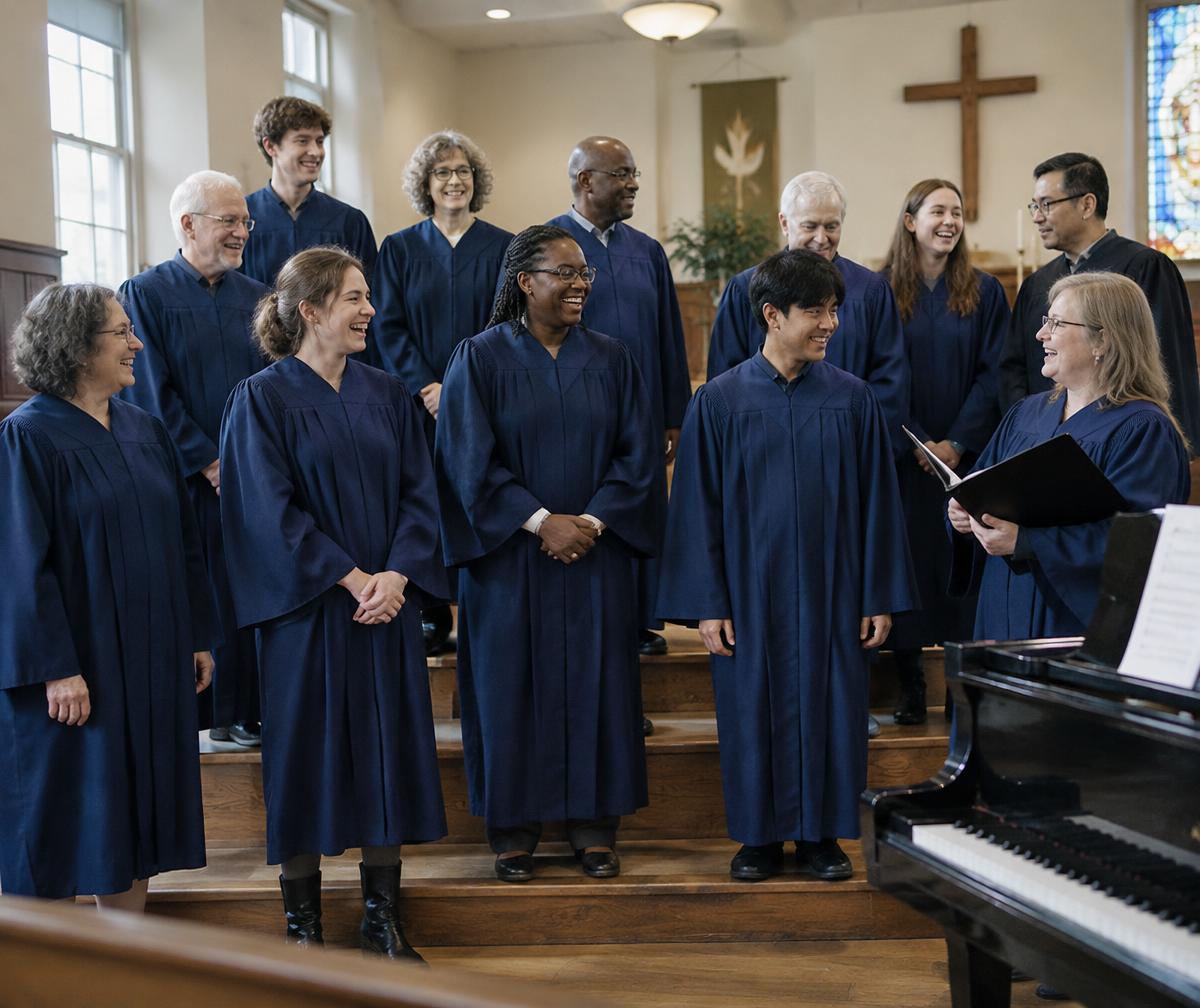
Church choir in navy robes smiling on wooden risers beside a grand piano
Go deeper

Study guides and ebooks help believers grow from new faith into steady, grounded discipleship.

More academy features on the way

Courses, workshops and starter kits will be added as the Academy grows.

Congregation in Sunday best applauding from wooden church pews
Keep the fellowship going

Articles, videos and resources that keep the church family connected all week long.